
History
Founded in 1955, the Tampere Summer University has played a key role in making Tampere a city of higher education and learning. Learn about the history of the Summer University and how it has evolved alongside a changing society.
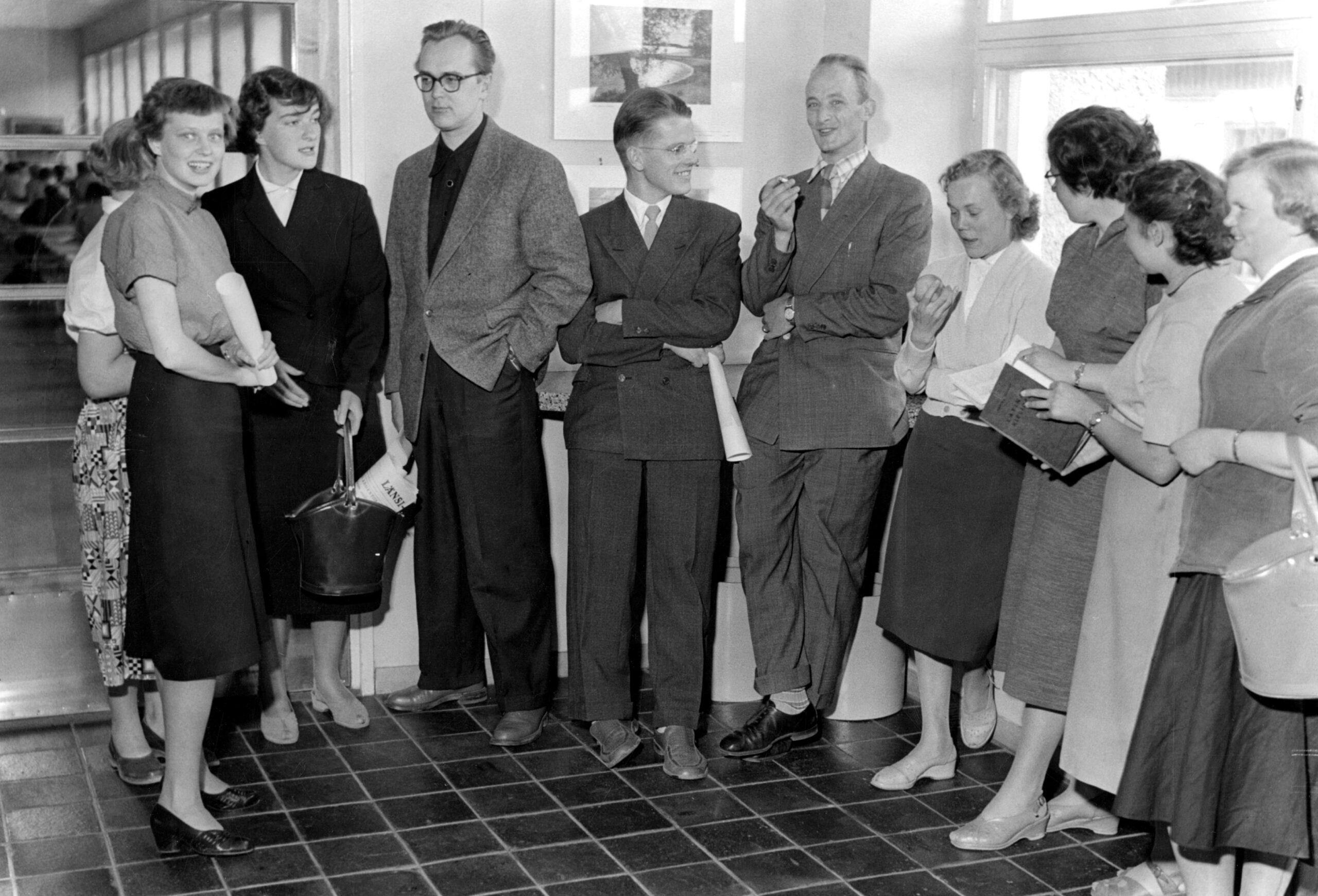
In the early 1950s, new institutions of higher education were established throughout Finland, but Tampere, a growing city, remained without its own institution of higher education despite its size. In Pirkanmaa, determined efforts were made to lay the groundwork for higher education. The idea of a summer university emerged, which would bring academic instruction to the city and strengthen ties to the world of science.
In 1955, a six-member Higher Education Committee was established, tasked with promoting the establishment of both a summer university and, later, a college in Tampere. The committee established the Tampere College Association and, within a few months, prepared for the first academic year of the Tampere Summer University, which began that very summer. The Summer University supported both those just starting at the university and those already studying there. Young people who had not attended secondary school were also able to study at the Summer University, which promoted free educational activities.
Toward a University City
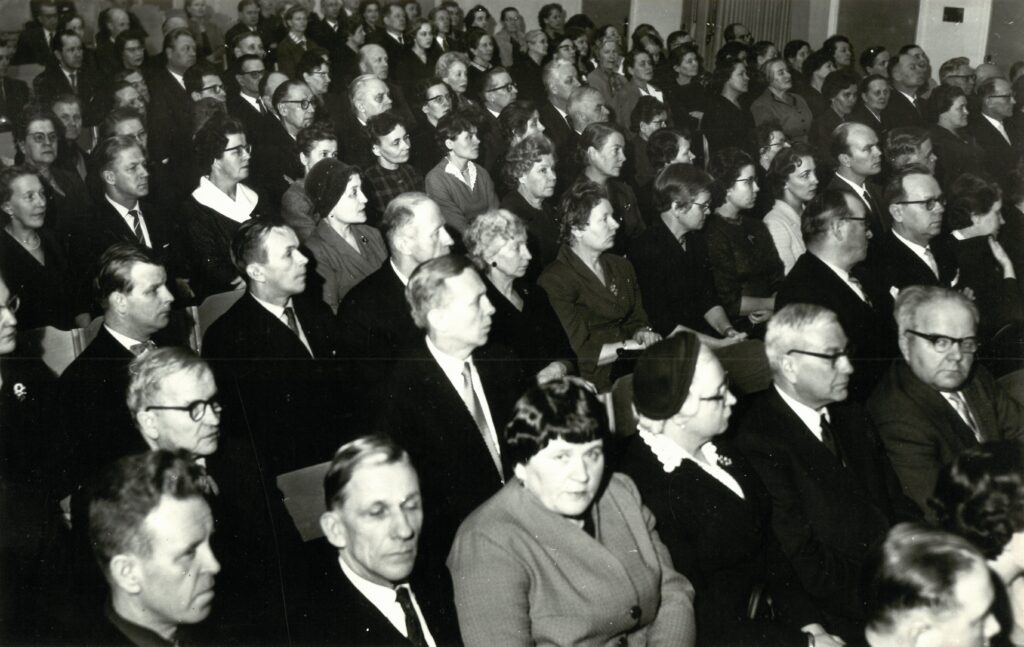
The establishment of the Summer University was part of a broader development aimed at bringing a university to Tampere. This goal was achieved in 1960, when the University of Social Sciences was relocated from Helsinki to Tampere. Later, the Technical University also began operating in the city as a branch campus in 1965 and eventually became an independent university in 1972.
The emergence of universities did not render the Summer University obsolete. Instead, the role of the summer university changed. It complemented the educational offerings of higher education institutions, made summer studies possible, and provided education to an ever-wider range of students.
In the 1970s, the Tampere Summer University began to gradually shift away from a focus on university-level instruction. Alongside open university education, there was an increasing emphasis on continuing education, arts and culture education, and other activities supporting lifelong learning.
Music and cultural education were a particularly prominent part of its activities. The Summer University actively contributed to the development of Tampere’s cultural life at a time when the city’s summer offerings were still considerably more limited than they are today. One of the most significant diversifications of the arts courses took place in 1976, when the Summer University, in collaboration with Tampere’s music schools, organized no fewer than 11 music courses. These courses eventually evolved into the Tampere Music Summer, which was held in the 1980s.
A Time of Change and Development
In the 1980s, advances in information technology and the information society increased the demand for education, including at the Tampere Summer University. The Summer University office acquired its first computer toward the end of the decade, but many practices remained very labor-intensive for a long time: student records were kept using a ledger system, and course syllabi were compiled by cutting and pasting. Technological advances gradually made administrative work easier, but collaborative networks and personal relationships remained a key asset in the university’s operations. In 1994, the Tampere Summer University moved to its current premises on Yliopistonkatu.
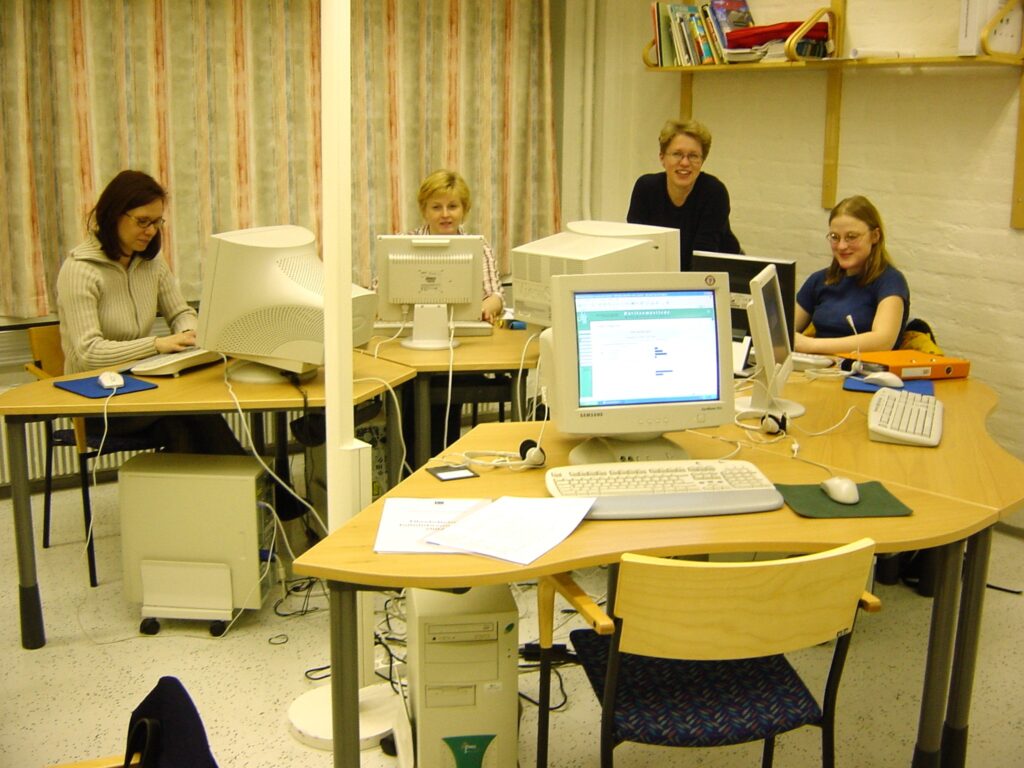
The recession of the 1990s increased demand for summer university courses, as many people turned to studying amid uncertainty in the job market. However, as the economy recovered, the situation changed. Public funding decreased, tuition fees had to be raised, and demand for education fell. The economic recovery drew many people back into the workforce. Financial difficulties threatened to spell the end of the Tampere Summer University. The situation required the Summer University to undergo internal reform, modernize, and come up with a new vision.
In 2000, Pirjo-Maija Rekola, the president of the Tampere Summer University, resigned, and her successor, Ritva Ojalehto, immediately began extensive efforts to save the Summer University. Financial management was streamlined, the course offerings were critically evaluated, and unnecessary expenses—such as the flamenco week—were cut. Teaching was improved by utilizing blended and distance learning. At the same time, collaboration with various stakeholders was strengthened, and efforts were made to anticipate future educational needs.
The reforms were also reflected in the organization. In 2001, the Tampere College Association changed its name to the Tampere Summer University Association, which more clearly reflected the association’s role as the operator of the summer university.
The Summer University’s New Rise
Previously, the Summer University’s activities had focused particularly on expanding educational opportunities for young people, but gradually the student body began to consist of professionals from various fields who wanted to develop their professional skills. This shift was supported by the “Pirkanmaa Open Adult Education Pathways” project, launched in 2000, which aimed to strengthen cooperation between higher education institutions and local communities in Pirkanmaa. The Tampere Summer University served as a key link in the project between education providers and students.
At the same time, the Summer University expanded its open university course offerings beyond the province’s borders. Courses began to be offered by an increasing number of Finnish universities, making it possible to study subjects that were not available in Tampere. The course selection included, for example, theology courses from the University of Helsinki and health administration courses from the University of Oulu. Even today, the Tampere Summer University offers a wide variety of open university courses from universities across Finland.
The importance of the Summer University has not diminished over the years; on the contrary, the need for continuous learning has grown. Open higher education, continuing education, and lifelong learning play an increasingly important role as the world of work and society continue to change. In 2018, institutions of liberal adult education were also tasked with organizing integration and language training for immigrants, which further expanded the social role of summer universities.
Although the future of the Summer University seemed uncertain at times around the turn of the millennium, the Tampere Summer University succeeded in reinventing itself and strengthening its position. The continuity of its operations has been based on the joint efforts of its staff, students, partners, and a broad regional network.
The Tampere Summer University has also had a significant impact on the development of the Pirkanmaa region. It has complemented the region’s educational offerings, supported the development of skills, and actively contributed to the promotion of cultural and educational activities. The Summer University has played a key role in making Tampere the city of education and learning that it is today.
Upcoming Training Sessions
-
 Begins 19.3.2027
Osaava kouluttaja
-
 Begins 19.6.2027
Performanssitaiteen kurssi
-
 Begins 18.5.2027
Infotilaisuus: Kiintymyssuhdekeskeisen lyhytterapian koulutus 30 op
-
 Begins 21.1.2027
Japanin kielen alkeiskurssi 2 (3 op)
-
Begins 25.1.2027
Advanced English Conversation Classes
-
 Begins 9.9.2027
Työhyvinvointivalmentaja – Business Terapeutti® 25 op
-
Begins 21.1.2027
Ukrainan kielen jatkokurssi 4 (4 op)
-
Begins 20.3.2027
Vocabulary and Word Building